

1844 Egypt | Alexandria - Cleopatra's Needles
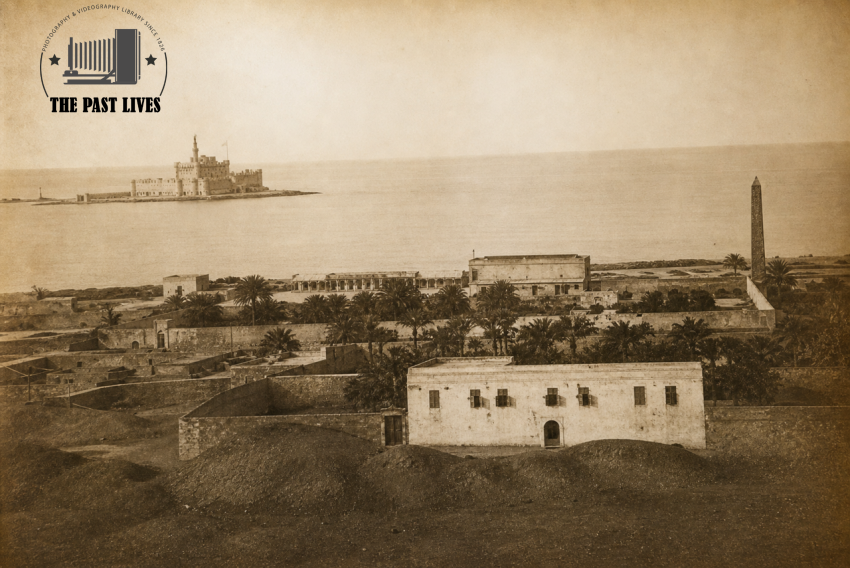
This photograph is one of the earliest known photographic documentations of Alexandria. It was taken using daguerreotype—the earliest photographic technique in history, invented by Louis Daguerre in 1839. Only five years had passed since its inception when this rare image was captured.
The photograph shows the Alexandrian coastline near Cleopatra's Needle (Les Aiguilles de Cléopâtre), the famous Egyptian obelisks that still stood in their original location at the time. In 1844, the Raml area was still a nearly deserted sandy beach, a small village nestled behind the dunes, before it transformed into one of modern Alexandria's most famous districts.
Jules Alphonse Eugène Itier was a French customs inspector (1802–1877) and a distinguished daguerreotype enthusiast. He was one of the most widely traveled photographers of the 19th century, and his photographs of Egypt and China represent the pinnacle of his unique photographic legacy.
Raml Station Through History
1844
This rare photograph was taken — the area consisted of sand dunes and a small village on the coast.
1858
Mohammed Said Pasha ordered the installation of a water network, marking the beginning of the gradual development of the area.
1863
The first horse-drawn tram line opened between Raml Station and the surrounding areas.
1887
The Italian engineer Antonio Lasciac designed the famous square in its Florentine style.
1897
The first electric tram in Alexandria began operating, passing through Raml Station.
Today
Raml Station — the heart of Alexandria and its most famous square — stands as a testament to two centuries of transformation.
Similar Photos
Admin
961 Photos
-
1.2k
-
0
-
0
License and Use
Free for commercial use Attribution required- Details
- Year Taken 1844
- Country Egypt
- Photo #1339
- Published on May 12, 2026
- Photo type PNG
- Resolution 3198x2135
- Photographer Jules Alphonse Eugène Itier
- Category Archaeological and...
- File size 7.7MB